
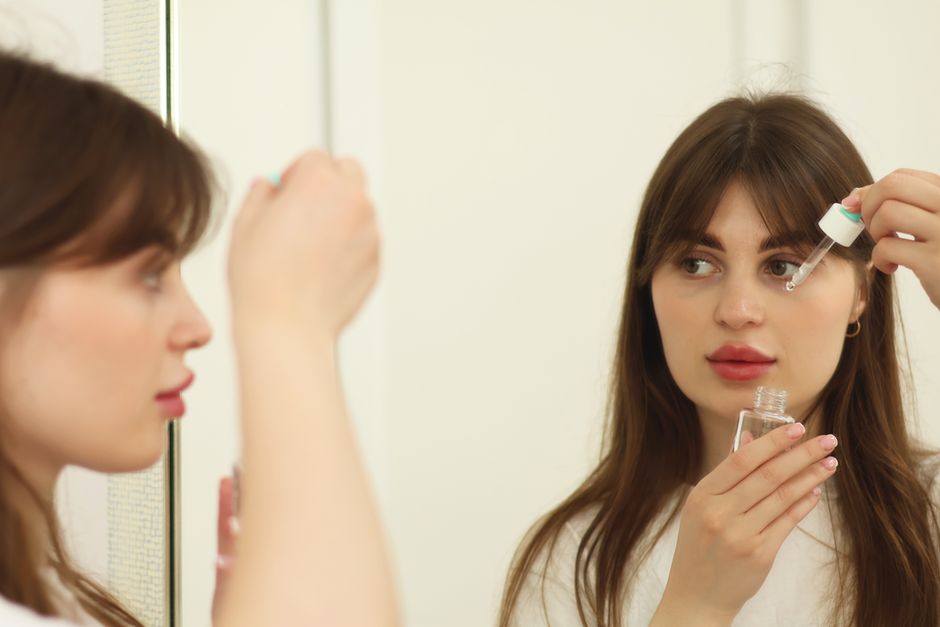
The most reliable way to get value from a hyaluronic acid serum is to know what the ingredient can and cannot do. Hyaluronic acid (HA) is a molecule that binds water and is naturally present in skin, and cosmetic products use it as a humectant to help skin hold moisture. A review in the medical literature also notes that HA applied to the skin from outside is cleared from the dermis and rapidly degraded, which is a good reason to keep expectations modest and to judge a serum by how your skin feels, not by dramatic claims.
What hyaluronic acid does in skin
A review of HA in skin and skin ageing, hosted on PubMed Central describes HA as a key molecule involved in skin moisture, with a unique capacity to retain water. It says skin holds roughly half of the body’s HA, with more in the dermis than the epidermis, and that HA helps regulate water balance, osmotic pressure and ion flow while supporting the skin barrier. The same review reports that with ageing, epidermal HA largely disappears and the size of HA polymers in skin decreases, which relates to moisture loss and reduced elasticity.
Wikipedia’s article on hyaluronic acid describes it as combining with water and swelling into a gel, and lists it as a common skin-care ingredient that conditions skin and acts as a humectant.
What a serum can realistically be expected to do
The key limitation, according to the review above, is that exogenous HA is cleared from the dermis and rapidly degraded. The review’s wider discussion is about HA in the skin itself, not a verdict on any single product, and it does not say that serums do nothing. It does mean that a serum should be viewed as a surface moisturising step rather than a way to replace the HA that skin loses with age. If a product’s marketing promises to erase wrinkles or rebuild skin structure, the sources reviewed here do not support that level of claim.
Serum is not the same as a filler
People sometimes mix up topical HA with injectable HA. Wikipedia explains that HA is also used as a dermal filler injected for facial wrinkles, with effects lasting 6 to 12 months, and that cosmetic injection can cause complications including nerve damage, bruising, pain and vascular occlusion that can cause tissue death or blindness. Injection is a medical procedure and a different thing from a bottle of serum. Do not compare the results of one to the other, and do not buy injectable products outside a clinical setting.
Reading the label before you buy
Because the ingredient is common, the differences between serums are in the rest of the formula and the claims. ChemLinked’s summary of Korean cosmetic regulation says products sold in Korea must carry a Korean label with the product name, manufacturer address, full ingredient list, batch number, expiry information and precautions for use. It also reports that 25 designated fragrance allergens must be listed individually when they exceed set concentrations (0.01 percent in rinse-off and 0.001 percent in leave-on products).
- Find HA on the ingredient list. It may appear under a chemical name, so read the whole list.
- Check the end of the list for fragrance allergens if you have scented products that bother you.
- Read the precautions for use on the pack.
- Check the expiry information and keep the box or a photo of it.
- Be sceptical of any product that makes drug-like promises. ChemLinked says functional cosmetic claims such as whitening, anti-wrinkle or UV protection are subject to review in Korea, and that functional products are designated as such.
Using a serum sensibly
The sources reviewed for this article do not give application instructions, so follow the directions printed on your product, which is where the manufacturer states how often and in what order to use it. A few cautious habits are common sense rather than findings from these sources:
- Introduce one new product at a time so you can tell what causes a reaction.
- Stop using it if you get persistent redness, stinging or itching, and ask a pharmacist or doctor.
- Keep the label or a photo of the ingredient list for reference.
- Judge it over a reasonable period by how the skin feels, not by a single day.
Common mistakes and what to verify
- Expecting a serum to behave like a filler. They are different products with different risks.
- Believing claims about rebuilding skin structure. The review cited here notes that externally applied HA is cleared and degraded quickly.
- Ignoring the full ingredient list. The HA content is only one part of the formula.
- Buying from unclear sources. Check that the product has proper labelling and a responsible company.
- Using several new actives at once. It becomes hard to tell what is irritating you.
Rules change: confirm with the official body
This is general information, not medical advice, and it does not replace a consultation with a doctor or pharmacist. Cosmetic labelling rules and the way functional claims are reviewed can change. For regulatory questions in Korea, check the Ministry of Food and Drug Safety, and for skin conditions or reactions speak to a qualified healthcare professional.
Sources
- PubMed Central: review of hyaluronic acid in skin and skin ageing – HA and skin moisture, ageing changes and the limit of topical HA.
- Wikipedia: Hyaluronic acid – humectant role, use in skin care and dermal filler risks.
- ChemLinked: South Korea Cosmetic Regulation – Korean label requirements and functional cosmetics.
- ChemLinked: South Korea Cosmetic Ingredients Requirements – fragrance allergen listing thresholds.