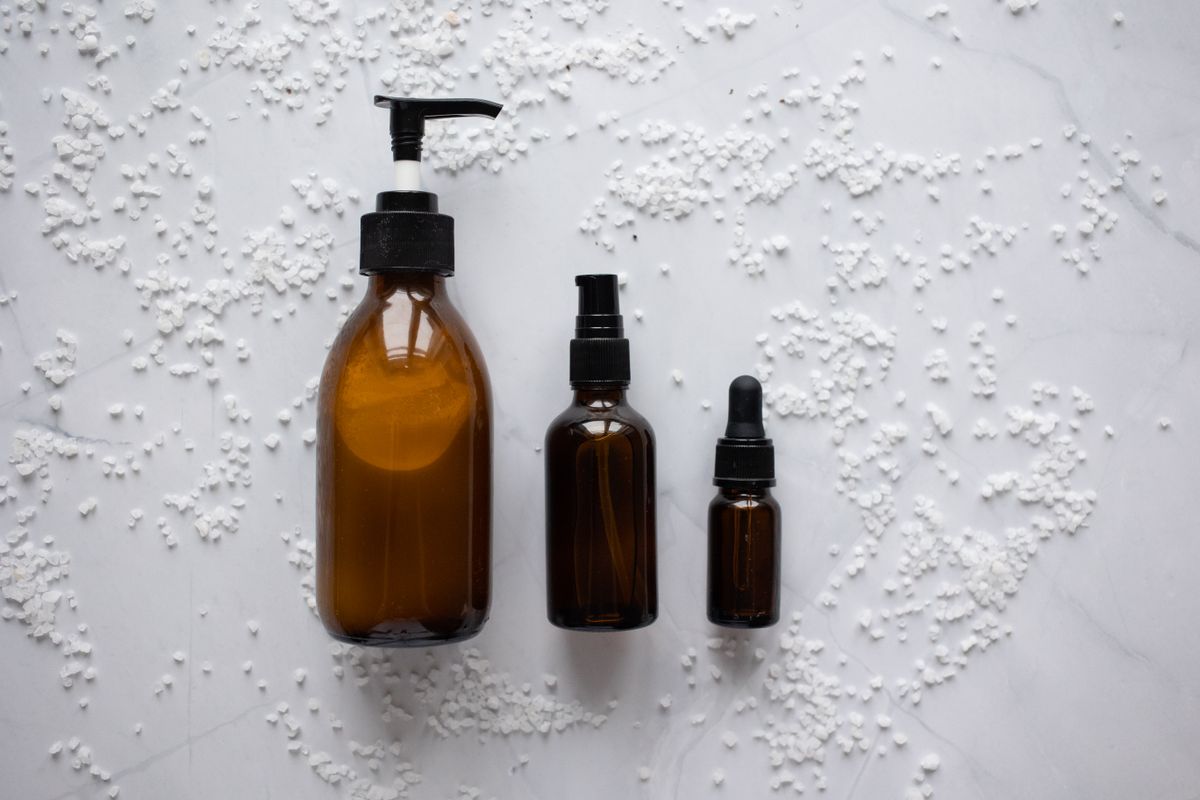
When you pack skincare for a trip out of Korea, two things decide what goes in your hand luggage: container size and how the items are carried. According to Incheon International Airport, liquids, sprays and gel-type cosmetics in a carry-on must be in containers of 100 ml or less, all together in one transparent resealable bag. Keeping each product’s name, ingredient list and instructions with you is a separate habit that helps you stay consistent with your routine and answer questions if you react to something.
The carry-on rule at Incheon
Incheon Airport’s restricted-items page says that on international flights, liquids in containers of 100 ml or less are allowed if they are placed in a single transparent ziplock bag of about 1 litre, with listed bag sizes of 20.5 cm by 20.5 cm or 15 cm by 25 cm. It allows one bag per person and says the bag must be sealed. The rule covers liquids, sprays and gel-type cosmetics, as well as toiletries such as toothpaste and shampoo, and medicines.
The page also says domestic flights have no such restriction, and that duty-free liquids can bypass the volume limit if they stay sealed in the official duty-free liquid bag until final boarding. Treat this as the rule at Incheon only. Your connecting airport and your airline may apply their own rules.
Another country’s rule, for comparison
The UK government’s hand luggage guidance states that at most airports you cannot take liquids in containers larger than 100 ml through security, that a single transparent resealable bag of about 20 cm by 20 cm is required where applicable, and that up to 2 litres is allowed for essential medical purposes, special dietary needs or baby food. It adds that airport security staff can refuse anything they consider dangerous even if it is normally permitted.
The point is not that rules are identical: they have the same 100 ml logic, but details such as bag size, exemptions and which airports apply them differ. Check the airport you leave from and any airport where you change planes.
What goes in the checked bag
For checked baggage, Incheon Airport says non-flammable sprays are permitted within limits, 500 grams or 500 ml per item and 2 kg or 2 litres in total per bag, following aviation dangerous-goods standards. Anything larger than 100 ml, including full-size moisturiser, toner or cleanser, can be considered for the checked bag instead of the carry-on. Check with your airline for any item that is flammable or pressurised.
Pack bottles in a sealed bag inside the case so leaks do not spread, and keep any product you will need on arrival in your hand luggage within the 100 ml limit.
Decanting without losing track of what you use
Moving products into smaller containers is a common way to meet the 100 ml rule, but it removes the label. A few ways to keep identity clear:
- Save a photo of the front of each product and of the ingredient list before you leave.
- Label each small container with the product name, not just a nickname.
- Keep the original instructions for use available, on paper or as a saved photo.
- Avoid making a collection of similar-looking unlabelled bottles.
ChemLinked’s summary of Korean cosmetic regulation says products sold in Korea must carry, in Korean, the product name, manufacturer address, full ingredient list, batch number, expiry information and precautions for use. That is the information worth capturing before you decant, since the original box or bottle may be the only place it appears. If you need to show a doctor or pharmacist what caused a reaction, the ingredient list is the most useful item.
Keep your routine simple while travelling
Travel can change climate, water and sleep. A shorter routine with products you already use is easier to monitor than introducing several new ones just before departure. If you plan to try something new, test it at home first, in a small area, and ask a pharmacist or doctor if you have a history of reactions. Follow each manufacturer’s instructions rather than assumptions from another product.
A packing checklist
- Sort products into carry-on (100 ml or less each) and checked bag.
- Put carry-on items in one transparent resealable bag per person, sealed.
- Confirm the rules for your departure airport, connecting airport and airline.
- Photograph product names, ingredient lists and instructions.
- Label decanted containers by product name.
- Keep duty-free liquids sealed in the official bag until you board.
Common mistakes and what to verify
- Assuming a partly used large bottle passes. Incheon’s wording refers to containers of 100 ml or less, so ask the airport or airline if you are unsure how a partly filled large container is treated.
- Opening a duty-free liquid bag before the final boarding point.
- Assuming domestic and international flights have the same rules. Incheon’s page says domestic flights are not restricted.
- Forgetting that a connecting country may apply different rules.
- Decanting without saving the label.
Rules change: confirm with the official body
This is general travel information, not medical advice. Aviation security rules are updated and can differ by airport and airline. Before you fly, check the departure airport’s current restricted-items page, your airline’s baggage policy, and the security authority of any country where you will transit. If you use prescription products, ask your doctor or pharmacist how to carry them.
Sources
- Incheon International Airport: restricted items, liquids, gels and aerosols – carry-on container limit, bag size and checked-baggage limits.
- GOV.UK: Hand luggage restrictions, liquids – another country’s 100 ml rule, medical exemption and duty-free handling.
- ChemLinked: South Korea Cosmetic Regulation – information that must appear on Korean cosmetic labels.